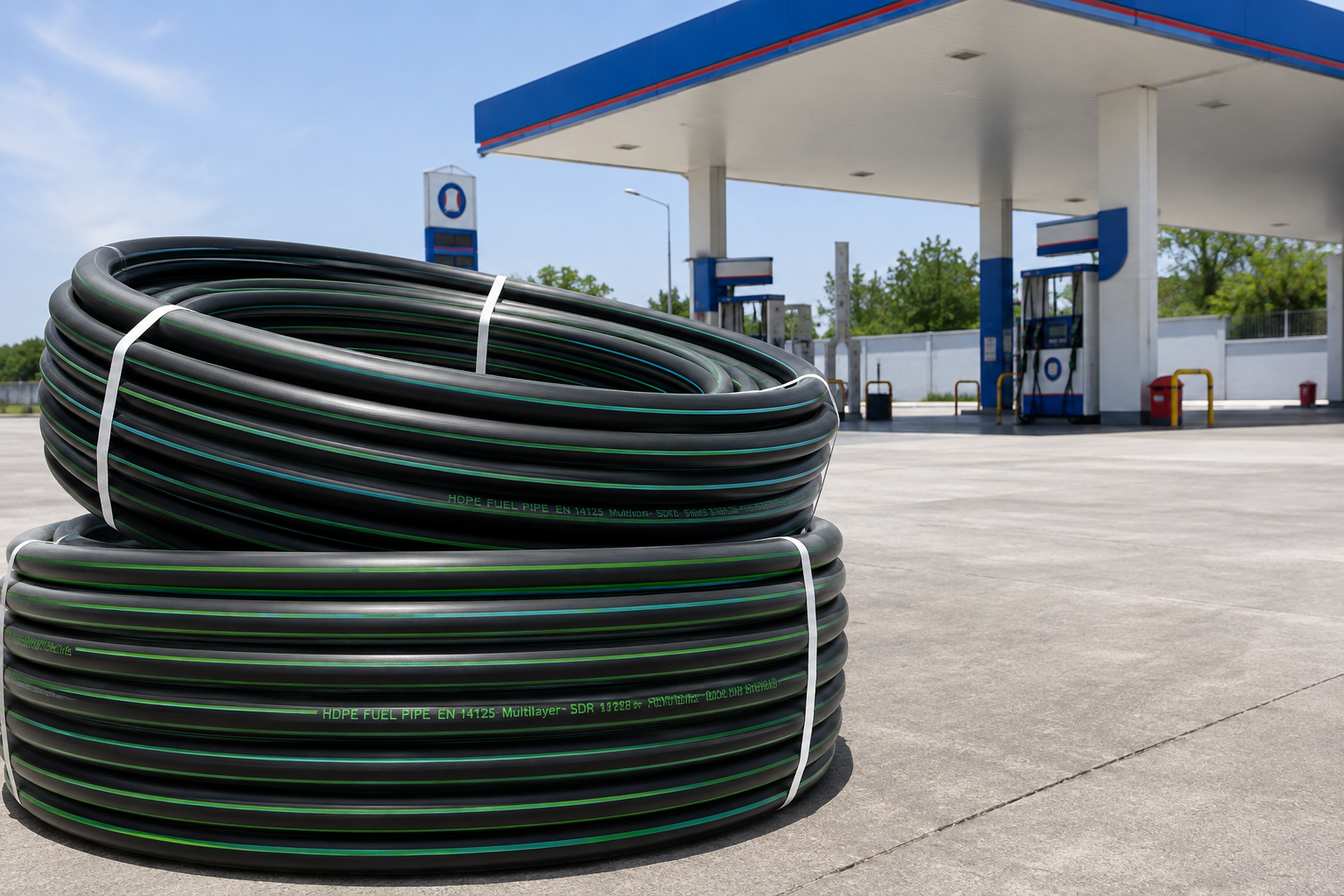
What Is an HDPE Fuel Pipe?
An HDPE fuel pipe is a specialized piping system designed for the safe transfer of petroleum fuels in applications such as petrol pumps and fuel storage facilities.
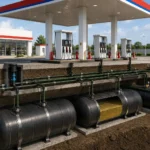
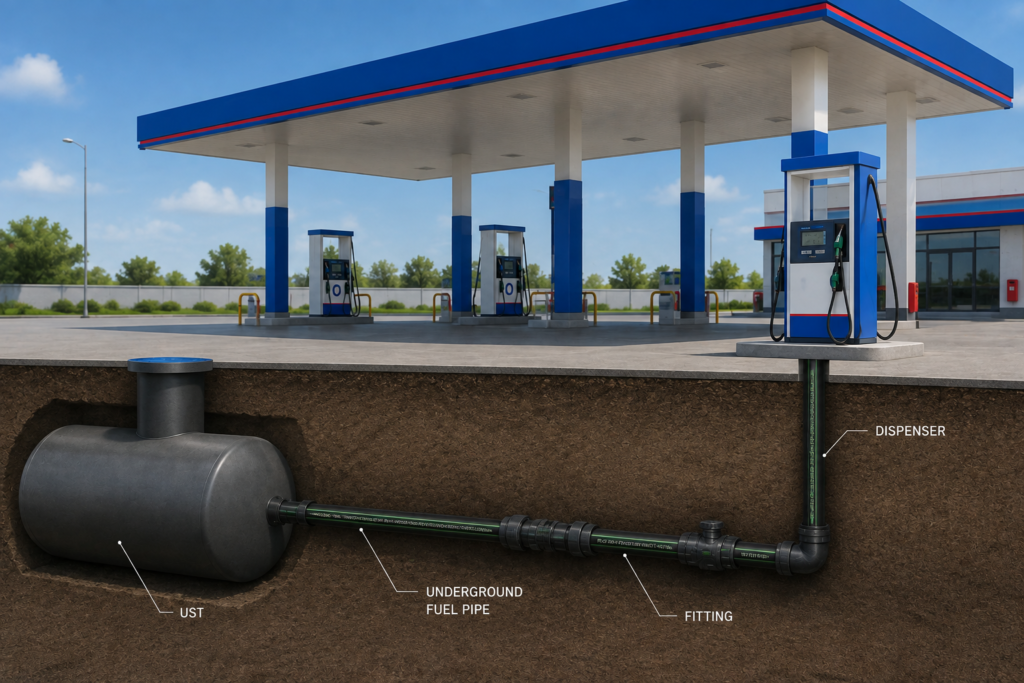
At a modern petrol pump, most of the fuel-handling infrastructure is hidden underground. Fuel stored inside an Underground Storage Tank (UST) needs a reliable piping system to carry it safely toward the dispensing system.
This underground pipeline is an important part of the overall fuel station infrastructure.
However, there is one important distinction:
An HDPE fuel pipe is not the same as an ordinary HDPE water pipe.
Fuel piping needs to be specifically designed and evaluated for petroleum applications.
Where Are HDPE Fuel Pipes Used?
At a typical petrol pump, fuel is stored in Underground Storage Tanks.
The underground piping system provides the route through which fuel moves between the storage and dispensing systems.
A simplified fuel flow can be understood as:
Underground Storage Tank → Fuel Pipe → Fittings & Connections → Dispenser
A complete underground fuel piping system may include:
- Multilayer HDPE fuel pipes
- Electrofusion couplers
- Electrofusion 90° elbows
- Electrofusion 45° elbows
- Electrofusion tees
- Transition fittings
- Flange adaptors
- Stub ends
- Backing rings
- Other specialized connection components
The pipe and fittings together form an engineered fuel piping system.
Why Is Ordinary HDPE Pipe Different from Fuel Pipe?
HDPE is widely used for water, gas and industrial applications, but petroleum fuels create a very different operating environment.
Petrol and diesel contain hydrocarbons, which means the piping material and complete piping system need to be suitable for the intended fuel application.
Some important considerations include:
Fuel Compatibility
The materials used in the pipe and fittings need to be suitable for contact with the fuels for which the system has been designed and evaluated.
Permeation
Fuel piping needs to address the movement of hydrocarbons through polymer materials.
Specialized multilayer pipes can incorporate a barrier layer to provide additional resistance against hydrocarbon permeation.
Joint Integrity
A high-quality pipe alone is not enough.
Couplers, elbows, tees and transition connections are equally important because the complete underground network needs reliable joints.
Mechanical Performance
Underground pipelines are exposed to soil conditions, installation loads and operational stresses.
For these reasons, a general-purpose HDPE water pipe should not automatically be considered suitable for petroleum fuel applications.
What Is a Multilayer HDPE Fuel Pipe?
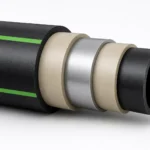
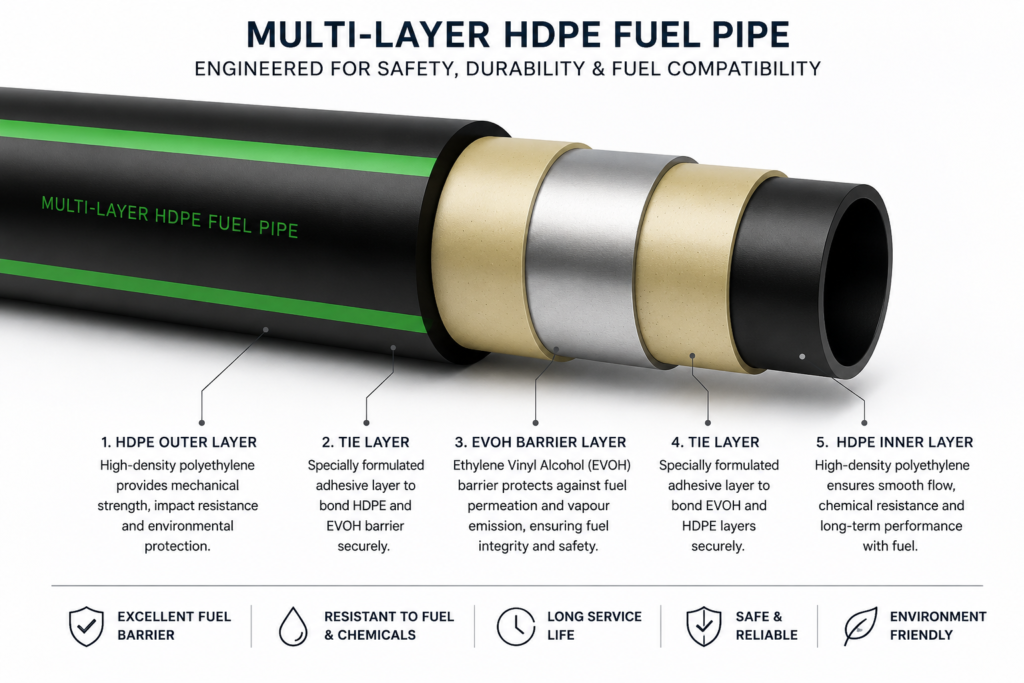
Instead of using only a single homogeneous material layer, specialized fuel pipes can be manufactured using a multilayer construction.
Different layers perform different functions within the pipe.
A typical multilayer construction can include:
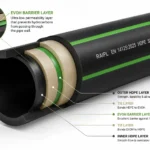
HDPE Layer → Tie Layer → Barrier Layer → Tie Layer → HDPE Layer
HDPE Layers
The HDPE layers provide important structural properties such as strength, flexibility and durability.
Tie Layers
Special bonding layers are used to maintain adhesion between different materials within the multilayer structure.
Barrier Layer
A specialized barrier material provides additional resistance against the permeation of hydrocarbons through the pipe wall.
One material commonly used as a barrier in multilayer polymer systems is EVOH – Ethylene Vinyl Alcohol.
Together, these different layers create an engineered pipe specifically designed for demanding fuel applications.
Why Is the Barrier Layer Important?
The barrier layer is one of the important features that distinguishes specialized multilayer fuel piping from conventional PE piping.
Its purpose is to provide additional resistance against hydrocarbon permeation through the pipe wall.
The HDPE layers provide structural properties, while the barrier layer adds another level of fuel-containment performance.
Instead of depending on one material to perform every function, the multilayer structure combines materials with different properties into one engineered pipe.
What Is EN 14125?
EN 14125 is an important European standard relating to thermoplastic and flexible metal pipework used for underground installations at petrol filling stations.
Fuel piping needs more than dimensional accuracy.
The pipe and its associated system components need to meet performance requirements relevant to petroleum applications.
This is why applicable standards, testing and certification are important when evaluating an underground fuel piping system.
RAIPL’s multilayer HDPE fuel piping system has been developed for specialized underground petroleum applications with EN 14125:2025 certification.
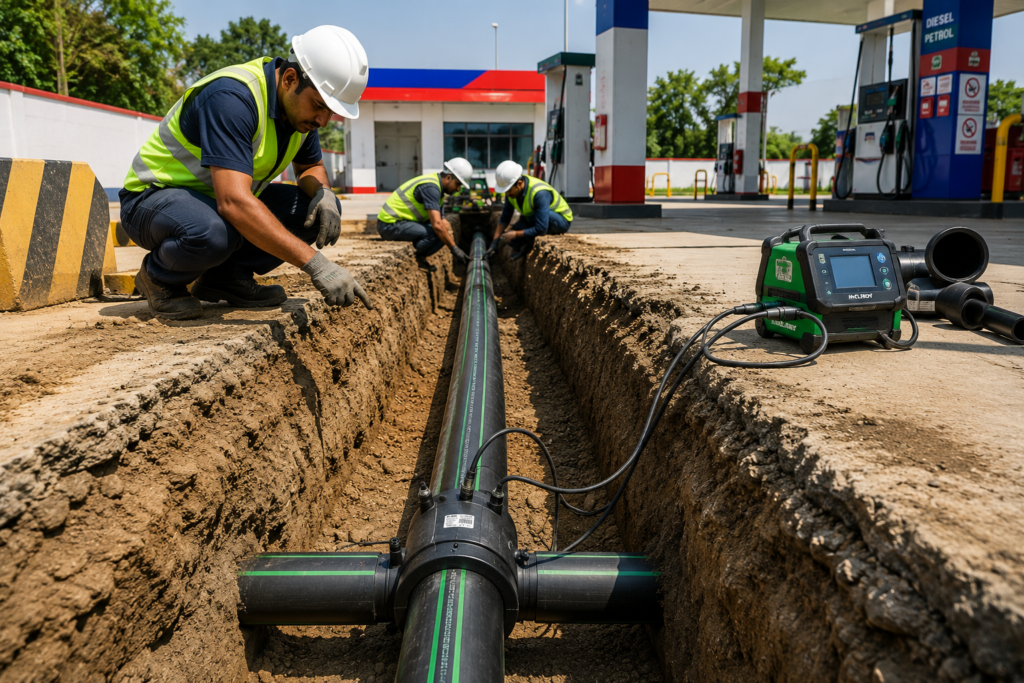
How Are HDPE Fuel Pipes Connected?
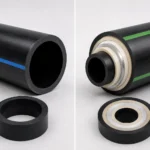
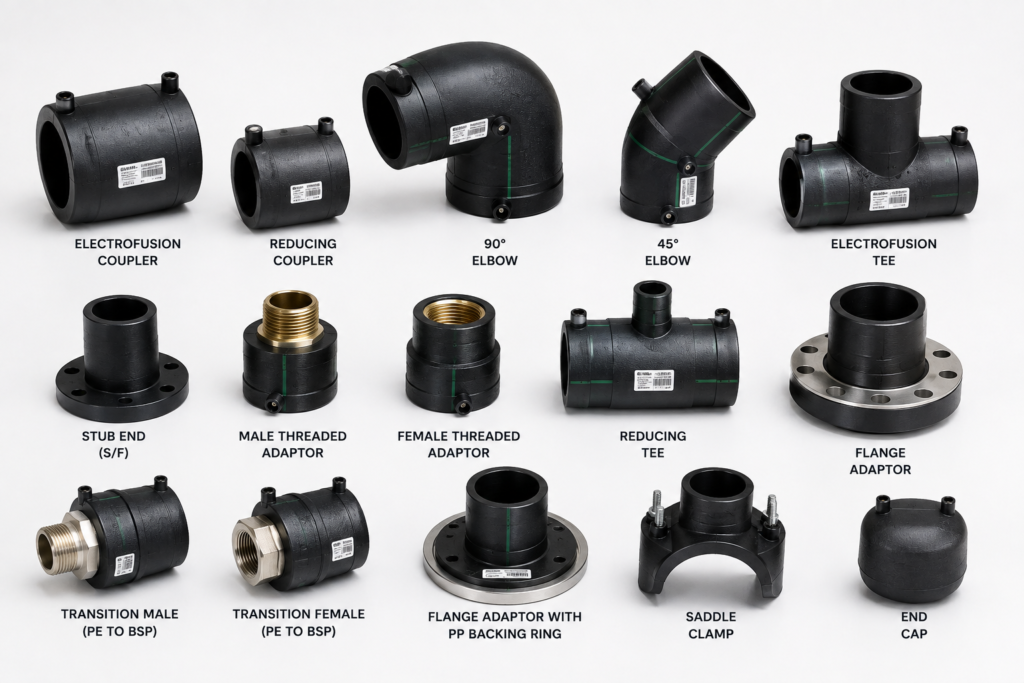
A fuel piping network requires several types of fittings to create straight connections, directional changes, branches and transitions.
Electrofusion Coupler
Used to connect two sections of HDPE pipe.
Electrofusion 90° Elbow
Used where the underground pipeline needs a 90-degree directional change.
Electrofusion 45° Elbow
Used for more gradual directional changes in the piping route.
Electrofusion Tee
Used when the piping layout requires a branch connection.
Transition Fittings
Used where the HDPE piping system needs to interface with threaded, metallic or other components.
Flange Connections
Flange adaptors, stub ends and backing rings may be used at suitable connection points depending on the system design.
Correct installation is extremely important because the reliability of an underground fuel piping system depends on both the pipe and its joints.
Why Is HDPE Suitable for Underground Fuel Piping?
Specialized HDPE fuel piping offers several characteristics useful for underground installations.
Corrosion Resistance
HDPE itself does not rust like conventional steel, which can be an important consideration in underground environments.
Flexibility
HDPE piping provides flexibility compared with rigid metallic piping and can assist with routing when installed according to the permitted bending requirements.
Long Pipe Lengths
Depending on the pipe size and system design, HDPE pipes can be supplied in longer lengths or coils.
Longer pipe runs can help reduce the number of intermediate joints required in certain installations.
Engineered Jointing
Compatible electrofusion fittings provide an engineered method for connecting the pipe and associated system components.
The final selection of piping technology should always depend on the project’s engineering design, specifications, applicable standards and regulatory requirements.
What Should You Check Before Selecting a Fuel Pipe?
An underground fuel pipe should never be selected only on the basis of diameter and price.
Buyers, consultants, contractors and project engineers should consider:
- Intended fuel application
- Applicable technical standard
- Certification and test documentation
- Fuel compatibility
- Pipe construction
- Barrier technology
- Compatible fittings
- Jointing method
- Product marking and traceability
- Installation requirements
- Manufacturer’s technical support
- Project-specific regulatory requirements
Most importantly, evaluate the complete piping system, not just the pipe.
Developing Fuel Piping Technology in India
India has a large and continuously developing fuel-retail infrastructure.
For many specialized petroleum infrastructure products, the industry has historically relied significantly on international technologies and imported products.
Developing advanced fuel piping systems within India can help create:
- Stronger domestic manufacturing capability
- Reduced dependence on imports
- Faster product availability
- Local technical support
- Better availability of components
- Development of India’s petroleum manufacturing ecosystem
RAIPL – Multilayer HDPE Fuel Piping Made in India
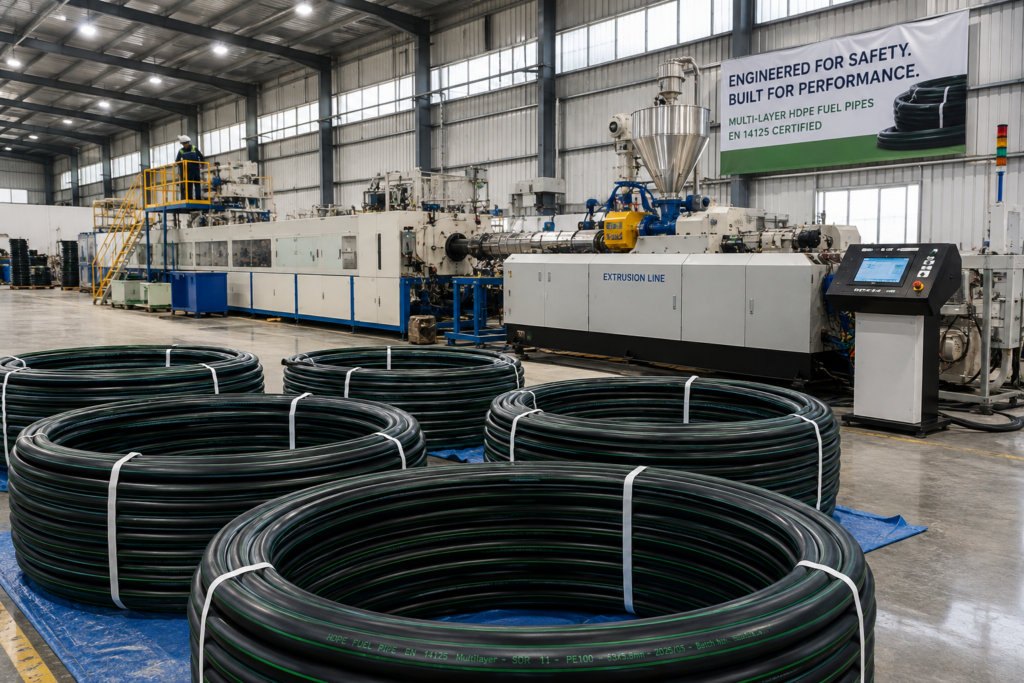
RAIPL (Rahul Arts India Pvt. Ltd.) has expanded its petroleum infrastructure capabilities into the manufacturing of specialized multilayer HDPE fuel piping systems for underground petroleum applications.
Our objective is to develop advanced fuel piping technology within India while reducing dependence on imported piping systems.
The RAIPL fuel piping range includes multilayer HDPE fuel pipes and compatible fittings designed to create a complete underground petroleum piping solution.
Our focus extends beyond manufacturing an individual pipe.
Our vision is to develop a complete Made-in-India underground fuel piping ecosystem for India’s growing petroleum infrastructure — and eventually take Indian fuel piping technology to international markets.
Frequently Asked Questions
Is HDPE pipe suitable for petrol and diesel?
Specialized HDPE piping systems can be designed for petroleum applications. However, an ordinary HDPE pipe intended for water or another application should not automatically be used for fuel.
Is an HDPE fuel pipe the same as a water pipe?
No. Specialized fuel piping can use different construction, barrier technology, fittings and testing requirements designed specifically for petroleum applications.
Why is a barrier layer used in fuel pipes?
A barrier layer provides additional resistance against the permeation of hydrocarbons through the pipe wall.
What fittings are used with HDPE fuel pipes?
Depending on the system design, fittings can include electrofusion couplers, elbows, tees, transition fittings, flange adaptors, stub ends and backing rings.
What is EN 14125?
EN 14125 is a European standard relating to thermoplastic and flexible metal pipework used for underground installations at petrol filling stations.
Can HDPE fuel pipes be installed at petrol pumps?
Specialized HDPE fuel piping systems designed and evaluated for petroleum applications can form part of underground petrol-station piping installations, subject to applicable project specifications, standards and regulatory requirements.
Building the Future of Fuel Piping in India
The infrastructure underneath a petrol pump is just as important as the equipment visible above ground.
With specialized multilayer construction, engineered fittings, controlled manufacturing and application-specific testing, modern HDPE fuel piping provides an advanced solution for underground petroleum installations.
RAIPL is committed to developing advanced fuel piping technology in India, for India — with the ambition of taking Made-in-India fuel piping solutions to global markets.