
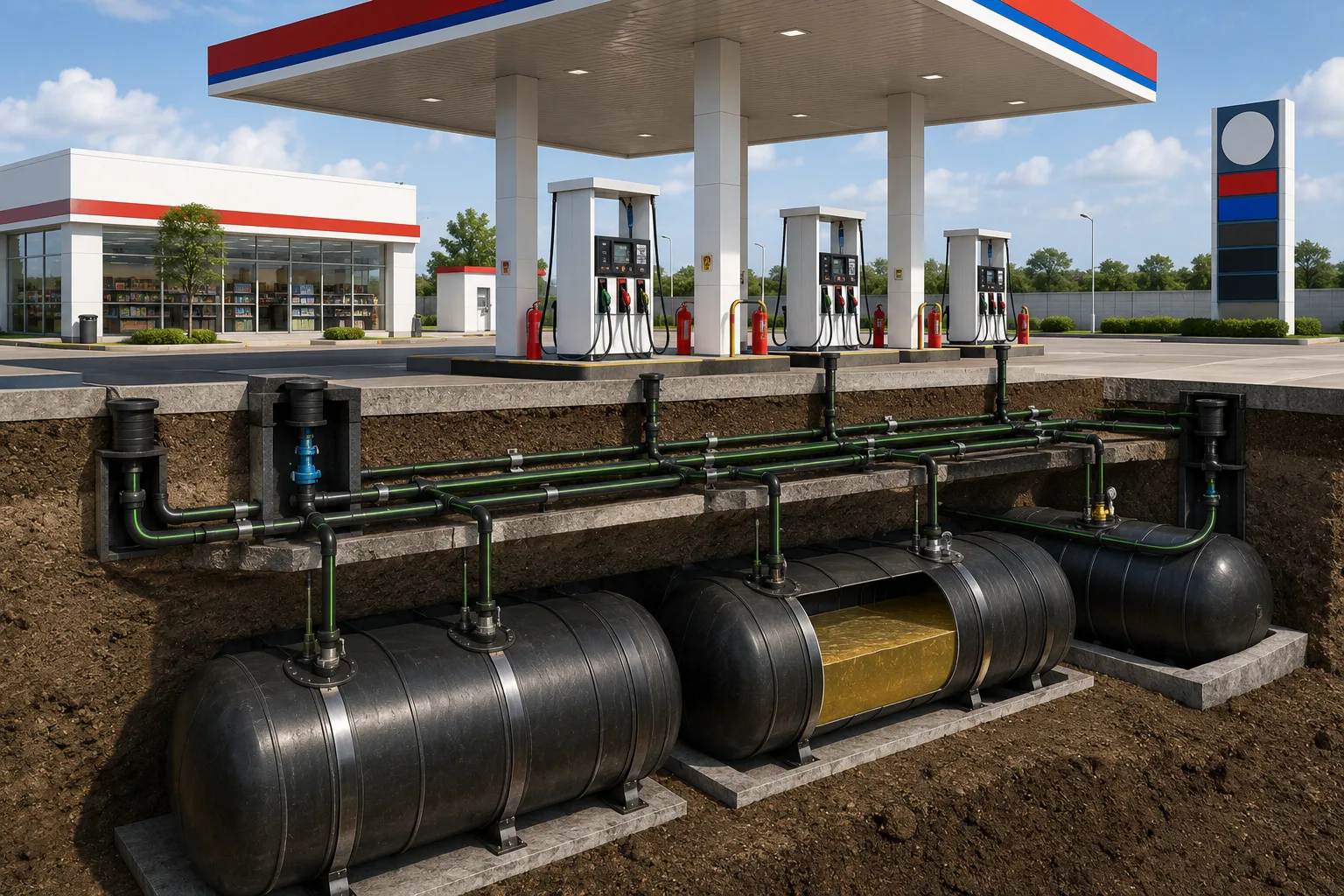
A petrol pump fuel piping system creates the underground connection between fuel storage tanks and dispensing equipment on the forecourt. Although most of the piping remains hidden after installation, it forms a critical part of the fuel delivery infrastructure.
A complete system can include multilayer HDPE fuel pipe, electrofusion couplers, elbows, tees, transition fittings and equipment connections arranged according to the engineered site layout.
Understanding how these components work together helps petrol pump owners, consultants and project teams evaluate the complete underground fuel path rather than considering the straight pipe alone.
What Is an Underground Fuel Piping System?
When a customer visits a petrol pump, they mainly see the dispenser, canopy, signage and other equipment above ground.
But a critical part of the fuel station is hidden beneath the forecourt.
The underground fuel piping system creates the connection between the fuel storage system and the dispensing equipment.
A simplified fuel route can be understood as:
Underground Storage Tank (UST) → Fuel Piping → Fittings & Connections → Dispenser
Although the concept appears simple, a complete underground fuel network contains multiple engineered components that need to work together reliably.
The pipe is only one part of that system.
How Does Fuel Travel from the UST to the Dispenser?
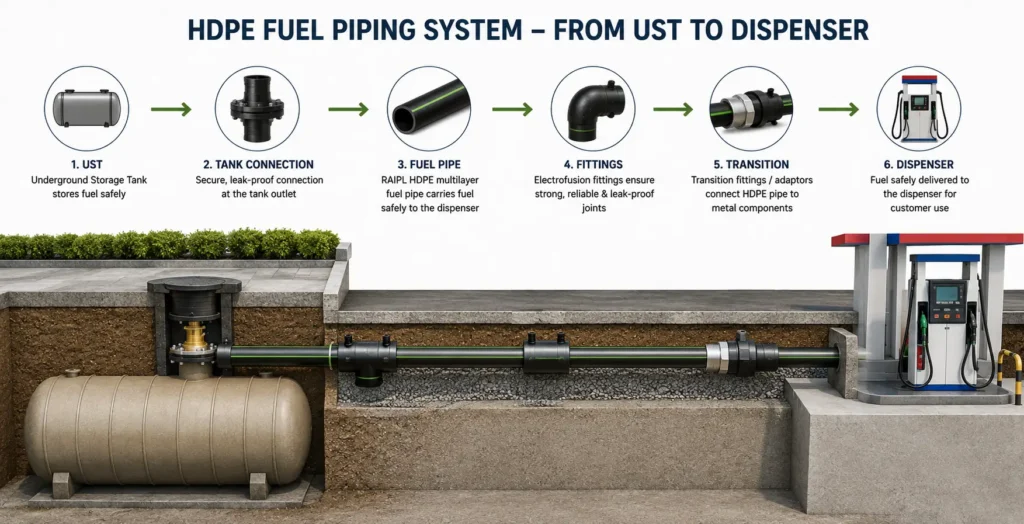
A simplified underground fuel piping route can be represented as:
Underground Storage Tank (UST)
↓
Tank Connection / Transition
↓
Multilayer HDPE Fuel Pipe
↓
Electrofusion Fittings
↓
Underground Fuel Pipe Route
↓
Dispenser Connection / Transition
↓
Fuel Dispenser
The exact configuration depends on the petrol pump layout, equipment arrangement and project engineering requirements.
Each route needs appropriate:
- Pipe
- Fittings
- Connections
- Transitions
- Installation
- Testing
- Identification
- Documentation
The exact configuration should always follow the project’s approved engineering design.
How Does a Petrol Pump Fuel Piping System Work?
1. Underground Storage Tank — Where the Fuel Is Stored
The Underground Storage Tank, commonly called a UST, is one of the central components of a petrol pump.
Fuel is stored inside these tanks beneath the forecourt.
A retail outlet can have separate tanks or tank compartments for different fuel grades depending on the station configuration.
The piping system begins at or around the relevant tank connection and carries fuel toward the dispensing system according to the station’s engineering design.
Because this infrastructure is underground, proper product selection and installation are extremely important.
2. Underground Fuel Pipe — The Main Transport Route
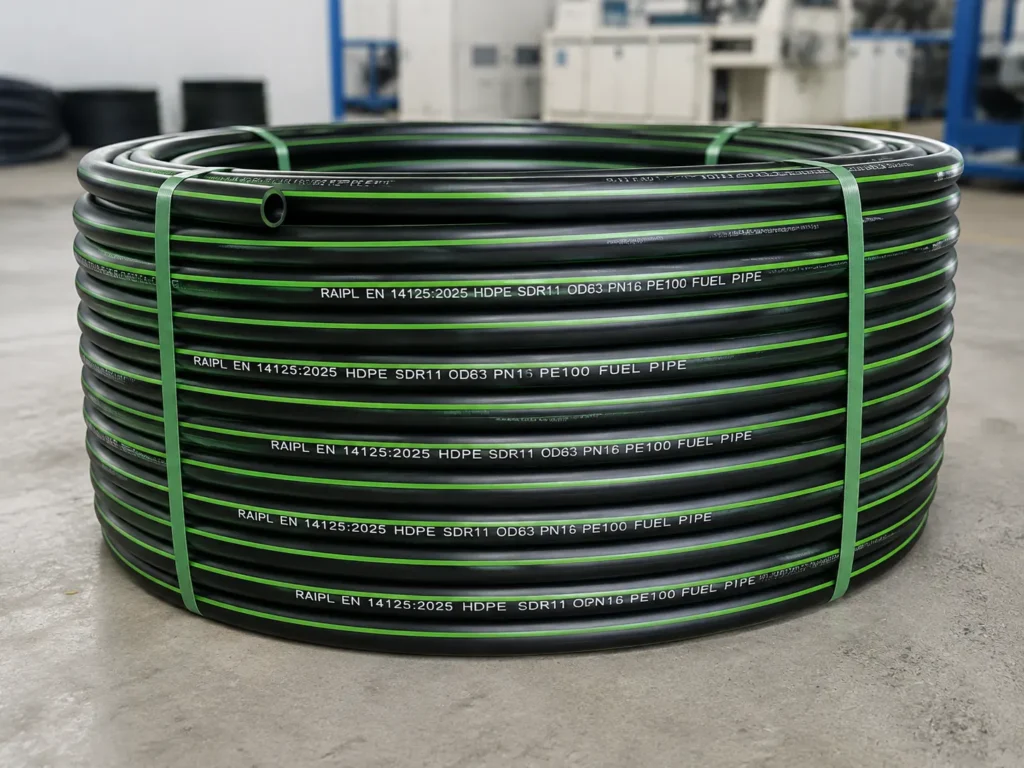
The fuel pipe creates the primary route between the tank area and the dispensing equipment.
Traditionally, different types of piping technologies have been used for this application.
Modern thermoplastic systems can use specialized multilayer HDPE fuel pipes designed for underground petroleum service.
These pipes should not be confused with ordinary HDPE water pipes.
A specialized multilayer fuel pipe can incorporate:
HDPE → Tie Layer → Barrier Layer → Tie Layer → HDPE
The HDPE provides important structural characteristics while the specialized barrier structure provides additional resistance against hydrocarbon permeation.
Why Long Continuous Pipe Lengths Can Be Useful
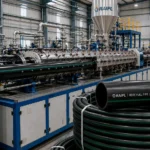
Depending on pipe diameter and system design, HDPE fuel piping can be supplied in relatively long continuous lengths or coils.
This can be useful in underground installations because it may reduce the number of intermediate connections required along suitable routes.
For example, if the tank-to-dispenser route can be completed using a longer continuous pipe section, fewer joints may be required compared with a layout involving many short rigid sections.
However, the actual route and joint locations should always follow the approved engineering design and manufacturer’s installation requirements.
3. Electrofusion Coupler — Connecting Pipe Sections
When two compatible HDPE pipe sections need to be joined, an electrofusion coupler can be used as part of the specified piping system.
The coupler contains an integrated electrical heating element.
During installation, the prepared pipe ends are inserted into the fitting and the prescribed electrofusion process is carried out.
Correct installation requires attention to:
- Pipe preparation
- Surface cleaning
- Scraping where specified
- Alignment
- Fusion parameters
- Cooling time
The joint should be made using the correct equipment and installation procedure.
4. Electrofusion 90° Elbow — Changing Direction
Underground fuel pipe routes are rarely perfectly straight.
The pipeline may need to change direction because of:
- Tank position
- Dispenser position
- Civil structures
- Other underground utilities
- Site layout
A compatible 90° electrofusion elbow can be used where the engineered route requires an approximately right-angle directional change.
The fitting becomes part of the fused HDPE piping network after correct installation.
5. Electrofusion 45° Elbow — Smoother Direction Changes
Not every route requires a 90-degree turn.
A 45° electrofusion elbow can be used where the design requires a more gradual change in direction.
Using the correct fitting allows the installer to follow the designed pipeline route without forcing the pipe beyond its permitted bending requirements.
Pipe flexibility should never be used as an excuse for excessive or uncontrolled bending.
6. Electrofusion Tee — Creating a Branch
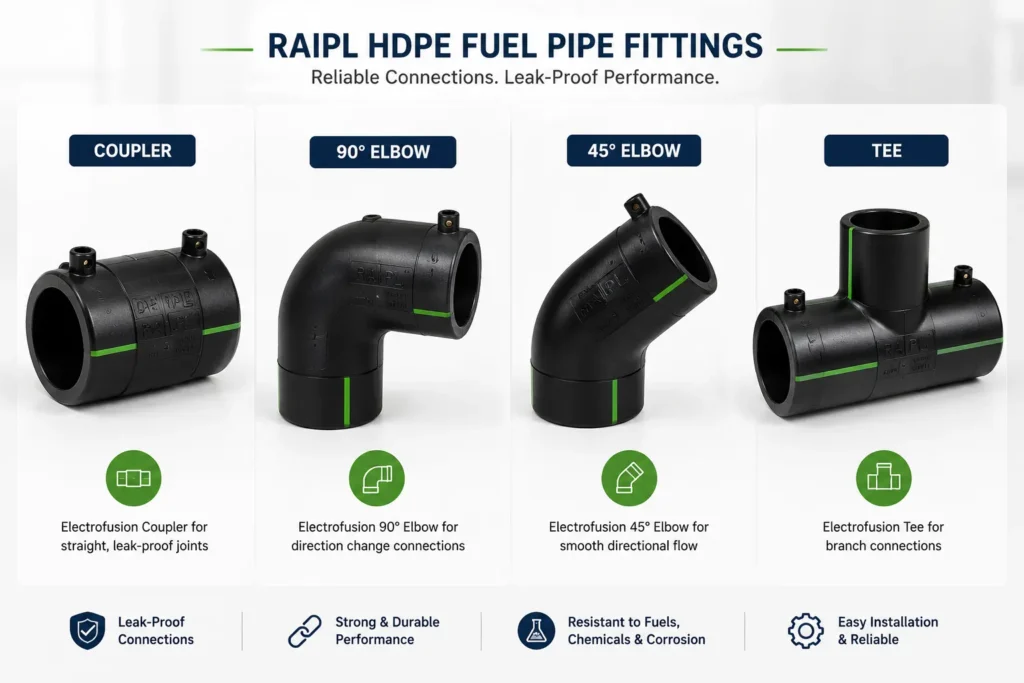
Some underground piping layouts require the pipeline to branch toward different system points.
A compatible electrofusion tee provides an engineered branch connection.
Like other electrofusion components, correct preparation, alignment, fusion and cooling procedures are important.
The exact use of tees depends on the station’s approved piping design.
7. Transition Fittings — Connecting Different Systems
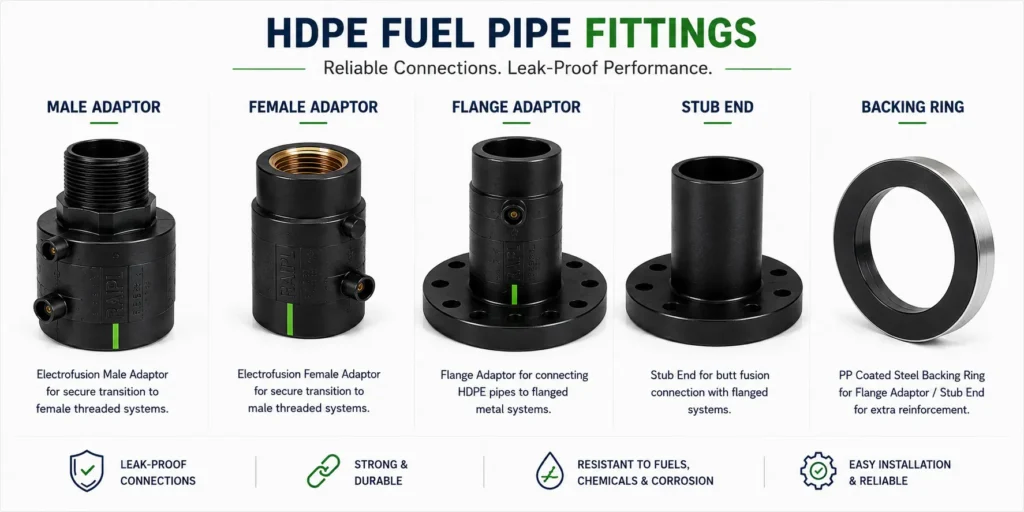
An underground HDPE fuel piping network eventually needs to interface with other equipment or connection types.
This is where transition fittings become important.
Depending on the system design, these can include:
- Male threaded adaptors
- Female threaded adaptors
- Flange adaptors
- Stub ends
- Backing rings
- Other approved transition components
A transition fitting provides the engineered interface between the thermoplastic piping system and another compatible connection.
These interfaces need particular attention because they connect components made from different materials or using different connection technologies.
8. Flange Adaptors, Stub Ends & Backing Rings
Flanged connections can be required at certain equipment or system interfaces.
A typical HDPE flange arrangement can involve components such as:
HDPE Flange Adaptor / Stub End + Backing Ring + Mating Flange
The HDPE component provides the connection to the thermoplastic piping system while the backing ring supports the bolted flange connection.
Correct dimensions, alignment, gasket selection where applicable, bolting procedure and system compatibility are important.
The exact flange configuration should follow the piping-system manufacturer’s instructions and project specification.
9. Connection Toward the Dispenser
After travelling underground from the tank area, the fuel line reaches the dispenser system.
This final interface is extremely important.
The connection arrangement depends on:
- Dispenser design
- Piping-system design
- Applicable fittings
- Project engineering
- Safety requirements
- Manufacturer recommendations
Suitable transition components are used where the underground thermoplastic piping network interfaces with the dispensing equipment.
This is why the complete piping system needs to be planned from tank connection to dispenser connection, not simply metre by metre.
Why the Complete System Matters
A common mistake when purchasing underground piping is to focus almost entirely on the pipe.
For example:
“We need 500 metres of 63 mm pipe.”
But the actual project requirement is much broader.
The complete bill of materials can include:
Pipe + Couplers + Elbows + Tees + Transitions + Flanges + Installation Equipment + Testing Requirements
Without compatible fittings and properly engineered interfaces, even a high-quality pipe cannot create a complete underground fuel network.
Don’t Mix Unverified Components
A piping system should not be assembled randomly from unrelated products simply because their nominal sizes appear to match.
Two fittings can both say 63 mm, for example, but that alone does not establish that they are suitable for use together in a specialized petroleum system.
Buyers and installers should verify:
- Product compatibility
- Material compatibility
- Dimensions
- Jointing requirements
- Intended application
- Applicable certification
- Manufacturer instructions
The complete network needs to function as an engineered system.
Why Electrofusion Installation Quality Matters
Electrofusion can provide reliable engineered connections when performed correctly.
However, the process needs discipline.
A good fitting cannot compensate for poor preparation.
Common areas requiring attention include:
Dirty Joint Surfaces
Dust, grease, moisture or other contamination can affect the fusion process.
Incorrect Scraping
Where scraping is specified, the pipe surface needs to be prepared according to the fitting and system requirements.
Misalignment
Pipe and fittings need to remain properly aligned during fusion and cooling.
Incorrect Fusion Parameters
The appropriate equipment and specified parameters need to be used.
Disturbing the Joint During Cooling
The joint needs sufficient cooling time before being subjected to movement or stress.
Installation personnel should therefore be appropriately trained for the piping system they are installing.
Trench Preparation Is Also Part of the System
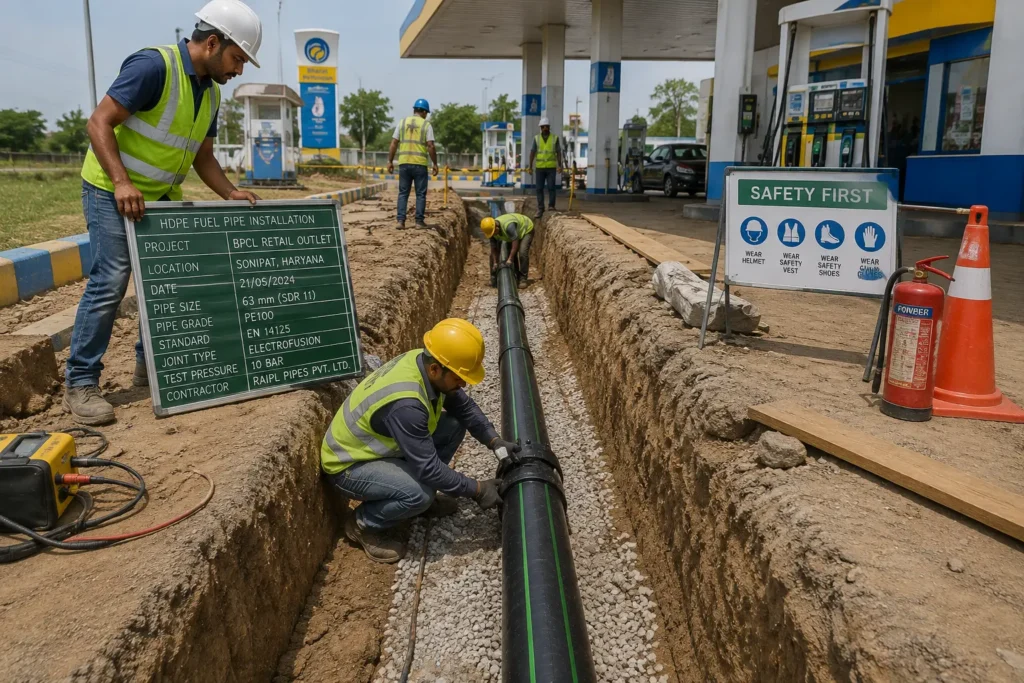
The performance of underground piping does not depend only on the pipe and fittings.
The trench environment also matters.
Installation requirements can include considerations relating to:
- Trench dimensions
- Bedding
- Pipe support
- Separation from other services
- Backfilling
- Compaction
- Protection from sharp objects
- Routing
- Bend radius
Exact requirements should follow the approved engineering drawings, applicable standards and piping manufacturer’s installation instructions.
Testing Before the Forecourt Is Closed
Once the underground piping is installed, access becomes considerably more difficult after backfilling and completion of the forecourt.
Testing and inspection before final closure are therefore extremely important.
Depending on the project and system requirements, commissioning procedures can include relevant:
- Visual inspection
- Joint inspection
- Pressure/integrity testing
- Leak testing
- System verification
- Documentation
The exact test procedure and acceptance criteria should follow the applicable system, project and regulatory requirements.
Product Identification and Traceability
Specialized petroleum infrastructure should be traceable.
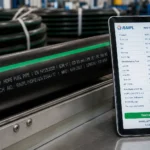
Pipe marking and product identification can help connect installed materials with relevant manufacturing and quality records.
Project documentation can also record:
- Pipe batches
- Fitting details
- Installation dates
- Installer information
- Fusion records where applicable
- Test records
- Inspection documentation
Good traceability can become valuable throughout the operating life of the installation.
A Simplified Petrol Pump Fuel Piping Layout
A typical conceptual arrangement can be visualized as:
UST
↓
Tank Connection
↓
Multilayer HDPE Fuel Pipe
↓
Electrofusion Coupler / Elbow as Required
↓
Underground Pipe Route
↓
Transition Connection
↓
Dispenser System
This is only a simplified representation.
Actual petrol pump piping layouts should always follow the approved engineering design for the specific site.
What Should Buyers Ask for When Purchasing a Complete System?
Rather than asking only for a pipe quotation, buyers should consider requesting information about the complete system.
Important questions include:
Which pipe sizes are available?
Confirm the sizes appropriate for the engineering design.
Which fittings are compatible?
Ask for the complete fitting range required for the project.
What technical standard applies?
Review the applicable standard and supporting documentation.
What certification is available?
Check the actual scope of the certification.
Is installation guidance available?
Specialized piping needs appropriate installation procedures.
Is technical support available?
Support can be important during product selection, installation and commissioning.
Is the system traceable?
Product identification and supporting documentation should be available according to applicable requirements.
EN 14125 and Complete Fuel Piping Systems
For thermoplastic and flexible metal pipework used in underground petrol filling station installations, EN 14125 is an important European standard.
One of the important lessons from specialized fuel piping standards is that the system matters.
It is not enough to focus only on the straight pipe.
The associated fittings, connections and system performance are also important considerations.
RAIPL’s multilayer HDPE fuel piping system has achieved EN 14125:2025 certification.
RAIPL Complete Underground Fuel Piping Solution
RAIPL (Rahul Arts India Pvt. Ltd.) is developing a complete Made-in-India underground fuel piping ecosystem for petroleum infrastructure.
The RAIPL product range includes specialized multilayer HDPE fuel pipes together with compatible connection components including:
- Electrofusion couplers
- Electrofusion 90° elbows
- Electrofusion 45° elbows
- Electrofusion tees
- Male transition adaptors
- Female transition adaptors
- Flange adaptors
- Stub ends
- Backing rings
- Other system-specific components
The objective is to provide customers with more than an individual pipe.
RAIPL’s approach is to develop the complete underground piping solution from pipe to fittings and connections.
Made in India — From Pipe to Complete System
Reducing import dependency in specialized petroleum infrastructure requires more than manufacturing one component domestically.
A complete ecosystem needs:
- Pipe manufacturing
- Multilayer technology
- Compatible fittings
- Technical documentation
- Testing capability
- Installation knowledge
- Quality control
- Technical support
RAIPL is working toward developing this ecosystem within India.
With specialized multilayer manufacturing and EN 14125:2025 certification, the long-term vision is to build an Indian fuel piping system capable of serving domestic petroleum infrastructure and future international markets.
Frequently Asked Questions
What connects the underground storage tank to a petrol dispenser?
An engineered underground fuel piping system provides the route between the tank area and dispensing equipment. The exact configuration depends on the station design and equipment.
What fittings are used with HDPE fuel pipe?
Depending on the system, fittings can include electrofusion couplers, 90° elbows, 45° elbows, tees, transition adaptors, flange adaptors, stub ends and backing rings.
What is an electrofusion coupler?
It is a specialized fitting containing an integrated electrical heating element used to join compatible HDPE pipe sections according to a specified fusion procedure.
Can different brands of pipe and fittings be mixed?
Compatibility should never be assumed simply because nominal sizes match. The system manufacturer’s requirements, certification scope and technical documentation should be checked.
Why are long HDPE pipe coils useful?
Long continuous lengths can reduce the number of intermediate underground connections required in suitable piping layouts.
Should underground fuel piping be tested before backfilling?
The installed system should undergo the inspections and testing required by the applicable project, piping system, engineering and regulatory requirements before final closure.
What You Don’t See Is Just as Important
Customers may never see the underground piping when they visit a petrol pump.
But underneath the forecourt is an engineered network connecting fuel storage with dispensing equipment.
Every component matters:
Tank Connection → Pipe → Coupler → Elbow → Tee → Transition → Dispenser
A reliable fuel piping installation therefore starts by thinking about the complete system, not simply the price of a metre of pipe.
RAIPL is developing that complete underground fuel piping ecosystem in India — from multilayer pipe to compatible fittings and connections.

One Response