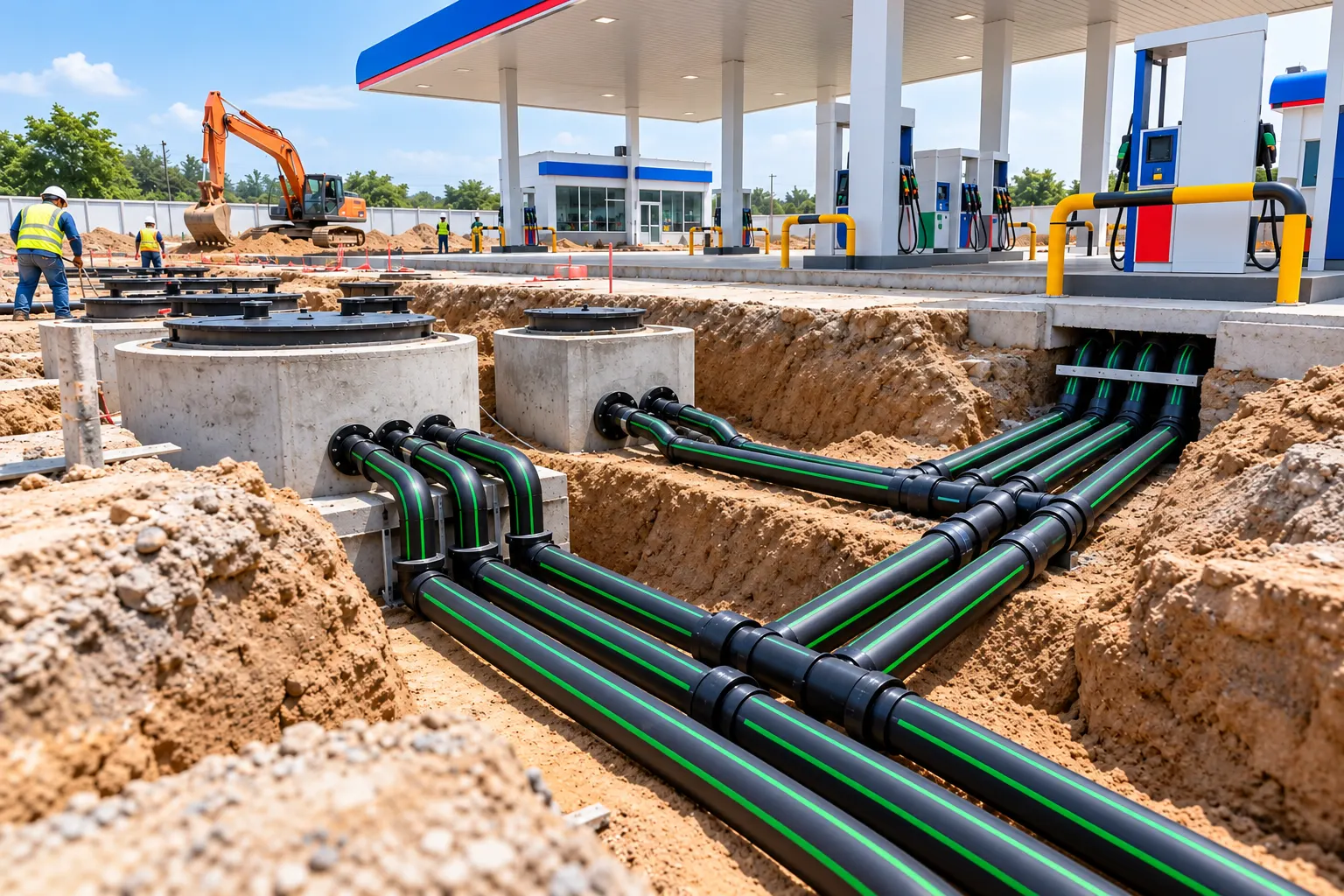
Building a new petrol pump or upgrading an existing fuel station? The selection of the correct HDPE fuel pipe for Petrol Pump Construction is a key element in the construction of reliable underground petroleum infrastructure.
While the customer can see the dispensers, canopies and forecourt equipment, the underground fuel piping system is just as important to the operation of the petrol pump.
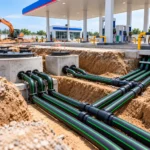
It connects the underground storage tanks (USTs) to the fuel dispensing equipment, conveying petroleum fuels through a network of pipes, fittings and engineered connections.
Choosing an appropriate fuel piping system for petrol pump contractors, OMC vendors, EPC companies and project engineers is more than just buying pipe by diameter.
The chosen system must meet applicable technical specifications, fuel compatibility requirements, installation procedures and project approvals.
This guide explains what buyers should look for in underground HDPE fuel piping for petrol pump construction and how RAIPL meets these needs with Indian manufacturing.
Why Is Underground Fuel Piping Important in Petrol Pump Construction?
A petrol pump is a combination of many inter-related infrastructure systems.
These may include underground storage tanks, fuel dispensers, piping networks, electrical installations, safety equipment and civil structures.
The fuel-transfer link between storage and dispensing systems is through the underground piping network.
A simplified arrangement is as follows:
Underground Storage Tank (UST) → Fuel Pipe → Compatible Fittings → Dispenser
The exact arrangement is based on the station design, dispensing technology and approved engineering drawings.
Because the fuel piping is buried under the forecourt, selecting the correct product and installation method during construction is critical.
Any future repair or replacement may require excavation, interruption of operation and additional cost.
Fuel piping should therefore be treated as a specialized engineering component and not as a normal construction material.
Why Use Specialized HDPE Fuel Pipe for Petrol Pumps?
The properties of specialized multilayer HDPE fuel piping can be useful in underground petroleum installations.
Corrosion Resistance
It doesn’t rust like traditional steel does.
This makes it a useful material for underground environments where metallic corrosion protection might otherwise have to be considered.
Flexibility
HDPE fuel pipes are more flexible than the rigid metallic pipes.
This could be useful for underground routing, depending on the allowed bend radius and the requirements of the project.
Lightweight Building
HDPE piping is generally lighter than comparable steel piping , and this can make it easier to transport and handle .
Longer Pipe Length
For some HDPE fuel pipe configurations, longer continuous lengths or coils are available.
This can reduce the number of intermediate joints in suitable layouts.
Barrier Technology Multilayer
Specialized HDPE fuel pipes can be incorporated with barrier materials to provide additional resistance against hydrocarbon permeation.
Engineered Joints
Compatible electrofusion fittings are an engineered solution for joining compatible HDPE fuel pipe components.
But these benefits do not mean that any HDPE pipe is acceptable for petroleum service.
Only piping systems that have been designed and evaluated for the intended fuel application should be considered.
What Type of HDPE Pipe Is Used for Petrol Pump Fuel Lines?
One of the common mistakes is to think that all HDPE pipes have the same applications.
HDPE pipes for water supply, gas distribution or other industrial applications can be produced regularly.
Various technical requirements of petrol pump fuel lines.
Specialized multilayer HDPE fuel piping may use the following construction:
HDPE → Tie Layer → EVOH Barrier → Tie Layer → HDPE
Each layer has a certain task.
HDPE Layer
Provide significant mechanical and structural features.
Tie Layers
Help hold the assorted materials stuck together.
EVOH Barrier
Provides greater resistance to hydrocarbon permeation through the pipe wall.
The complete build shall be evaluated for the intended petroleum application.
This is not to say that you should automatically substitute a regular HDPE water pipe for specialized fuel piping.
Which HDPE Fuel Pipe Sizes Are Used in Petrol Pump Construction?
The required diameter of the fuel pipe will be specified in the approved engineering design.
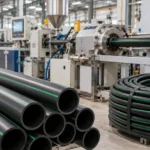
RAIPL manufactures 63mm & 90mm multilayer HDPE fuel pipes for special underground petroleum applications.
HDPE Fuel Pipe 63mm
A 63mm fuel pipe may be specified for suitable underground piping routes depending upon hydraulic design and project requirements.
RAIPL is offering 63 mm multilayer HDPE fuel pipe in coil.
HDPE Fuel Pipe 90mm
If the engineering design specifies a 90mm diameter, we may select a 90mm fuel pipe.
RAIPL provides 90mm multilayer HDPE fuel pipe in straight length versions.
How Should Contractors Choose the Correct Size?
The decision should consider:
- Required fuel flow
- Pipeline length
- System pressure and hydraulic requirements
- Number of dispensing points
- Piping layout
- Compatible fittings
- Applicable OMC specifications
- Consultant-approved drawings
Pipe size should always follow the approved engineering design rather than assumptions about which diameter is better.
What Fittings Are Required for Petrol Pump HDPE Fuel Piping?
To have a complete underground fuel piping system, compatible components are a must.
These may include, depending on the design of the project:
Electro-fusion Couplers
Joining appropriate sections of HDPE fuel pipe.
90° Electrofusion Elbows
Used when the piping route needs to make a 90 degree turn.
45° Electrofusion Elbows
For directional changes specified used.
Electrofusion Tees
To be used where a branch connection is required on the pipeline.
Transition Fittings
Used at the junction of the HDPE piping network with other specified equipment or connection types.
Flange adaptors, stub ends and back rings
For use in suitable flange connection points according to the approved system design.
All fittings should be checked for compatibility with the selected fuel piping system.
RAIPL offers multilayer HDPE fuel pipes and a wide range of electrofusion and transition fittings.
What Is EN 14125:2025 for Petrol Pump Fuel Piping?
EN 14125:2025 is a European standard for thermoplastic and flexible metal piping for underground use at petrol filling stations.
It defines the technical requirements and test methods for specialized fuel piping systems.
Contractors should consider the following when looking for an HDPE fuel pipe manufacturer:
- Applicable standard and edition
- Manufacturer name
- Product construction
- Pipe sizes covered
- Certificate scope
- Relevant test documentation
- Compatible system components
The RAIPL multi layer HDPE fuel piping system is certified as per EN 14125:2025.
Buyers must ensure that the documentation covers the products and configurations being specified.
Technical certification must not be confused with project specific OMC acceptance or Indian regulatory approval.
PESO Approval and Petrol Pump Piping Requirements in India
In India, the construction of standarfor thermoplastic and flexible metal piping for underground use at petrol filling stations.
It defines the technical requirements and test methods for specialized fuel piping systems.
Contractors should consider the following when looking for an HDPE fuel pipe manufacturer:petrol pumps
The regulatory requirements in this regard are administered by the Petroleum and Explosives Safety Organization (PESO).
Buyers who are considering fuel piping products should establish if they need applicable PESO documentation and what it can cover.
RAIPL has received PESO approval for its fuel piping manufacturing activities.
The contractors should ask for the relevant documentation and check whether it applies to the project.
It is important to note that:
These are different things, EN 14125 certification, PESO approval, OMC project acceptance.
A product shall not be specified or installed unless the relevant technical and regulatory requirements have been met.
What Should Petrol Pump Contractors Check Before Buying HDPE Fuel Pipes?
Before placing a purchase order, contractors should prepare a technical procurement checklist.
| Requirement | What to Check |
|---|---|
| Project type | New petrol pump or refurbishment |
| OMC | Applicable project owner and specifications |
| Pipe diameter | 63mm, 90mm or approved size |
| Pipe length | Required quantity in metres |
| Fuel type | Intended petroleum fuel |
| Certification | Relevant EN 14125 documentation |
| Regulatory requirements | Applicable PESO and other requirements |
| Fittings | Compatible couplers, elbows, tees and transitions |
| Installation | Approved jointing and installation procedure |
| Testing | Project commissioning requirements |
| Traceability | Product markings and batch identification |
| Delivery | Project location and required schedule |
This checklist can help contractors prepare technical submissions and compare supplier quotations.
HDPE Fuel Pipe Installation: Important Considerations
Proper installation is essential to the performance of an underground fuel piping system.
A pipe can be technically correct, but can be rendered useless by mishandling or poor jointing.
When installing, the important points to consider are:
Correct Pipe Handling
Protect pipe surfaces from damage in transit, storage and installation.
Proper Cutting
Pipe ends shall be prepared in accordance with the manufacturer’s installation procedure.
Surface Preparation
Surface preparation of the pipe and fittings is required for electrofusion joints .
Positioning
During jointing the pipes and fittings shall be properly aligned and secured.
Controlled Fusion
Use approved electrofusion equipment and the fusion parameters as specified by the manufacturer.
Time to Cool
Allow the cooling period prescribed to elapse before disturbing the joint.
Testing and Inspection
Carry out the inspection and commissioning procedures required before putting the system into service.
Fuel piping should be installed by qualified personnel in accordance with approved system procedures.
HDPE Fuel Pipe for New Petrol Pumps vs Existing Petrol Pump Refurbishment
Procurement needs could vary depending on whether it is a new build or a refurbishment.
Construction of New Petrol Pump
For new projects, the underground piping system can be included in the approved engineering design up front.
This allows for the coordination of pipe routes, tank connections, dispenser locations and fittings required.
Renovation of Existing Petrol Pump
Refurbishment projects could include the replacement of existing underground fuel piping.
Contractors must review existing infrastructure, connection point compatibility, excavation constraints and applicable project requirements.
Don’t assume that existing electrofusion fittings are reusable once the pipe is removed from them.
Any replacement system shall be designed and fitted with appropriate new components in accordance with the approved procedure.
Why Choose an Indian HDPE Fuel Pipe Manufacturer?
Indian manufacturing provides a domestic sourcing option for specialized petroleum piping products.
Potential advantages include:
- Reduced dependence on imported products
- Direct communication with the manufacturer
- Local technical coordination
- Availability of compatible components
- Procurement planning flexibility
- Support for India’s specialized manufacturing ecosystem
However, supplier selection should still be based on documented technical suitability, certification, product quality and project requirements.
RAIPL: Made-in-India HDPE Fuel Pipe for Petrol Pump Projects
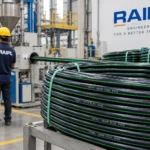
RAIPL (Rahul Arts India Pvt. Ltd.), through its RAI Pipe business, manufactures specialized multilayer HDPE fuel pipes for underground petroleum applications.
The RAIPL product range includes:
- 63mm multilayer HDPE fuel pipe
- 90mm multilayer HDPE fuel pipe
- Electrofusion couplers
- Electrofusion 45° and 90° elbows
- Electrofusion tees
- Transition fittings
- Associated connection components
RAIPL has obtained certification for its multilayer HDPE fuel piping system under EN 14125:2025 and has PESO approval for its manufacturing activities.
Our focus is to provide engineered fuel piping solution with compatible components for Indian petroleum infrastructure projects.
Request for Technical Data and Quotation
RAIPL will be happy to help contractors with their petrol pump construction or refurbishment needs. Contractors can contact RAIPL with their project specifications, pipe quantities, fittings and delivery schedule.
Our team will give you the relevant product information and commercial quotes.
Frequently Asked Questions
What HDPE pipe is used for fuel lines at petrol pumps?
Use petroleum-approved HDPE fuel piping, as designed and evaluated for petroleum applications according to the project’s approved specifications and regulatory requirements. It must not be assumed that normal HDPE water pipes will be suitable.
Can HDPE pipe be used for underground petrol pump installation?
Specialized HDPE fuel piping can be used for appropriate underground petroleum installations where the system meets applicable technical, regulatory and project requirements.
What sizes of HDPE fuel pipe does RAIPL manufacture?
RAIPL manufactures 63 and 90 mm multilayer HDPE fuel pipes.
What is EN 14125:2025 certification?
EN 14125:2025 is a European technical standard for thermoplastic and flexible metal specialized underground pipework for petrol filling stations.
PESO approval is required for petrol pump piping?
Depending on the installation and governing rules, PESO and other applicable regulatory requirements will apply. Project owners and contractors should review the requirements that are applicable to their specific project.
Do HDPE fuel pipes need electrofusion fittings?
Wherever engineered piping layout includes joints, branches or transitions, compatible fittings are necessary. Electrofusion fittings are one technique used in specialized HDPE fuel piping systems.
Can HDPE fuel pipes replace existing steel fuel pipes?
Where the proposed system is technically suitable and approved for the project, replacement may be possible. Engineering design, compatibility, applicable regulations and installation shall be evaluated.
Where to find HDPE fuel pipe for petrol pump construction in India for contractors?
Specialized manufacturers of petroleum piping such as RAIPL can be contacted by contractors for multilayer HDPE fuel pipes, compatible fittings, technical documentation and quotations.
Buy HDPE Fuel Pipe for Petrol Pump Construction — Contact RAIPL
Are you starting a new petrol pump or upgrading your existing fuel station?
RAIPL produces multilayer HDPE fuel pipes & compatible fittings for specialized underground petroleum applications, all Made-in-India.
Provide us with your project specs, needed pipe sizes, quantities and delivery location.
Explore 63mm HDPE Fuel Pipe | Explore 90mm HDPE Fuel Pipe | Request a Quotation