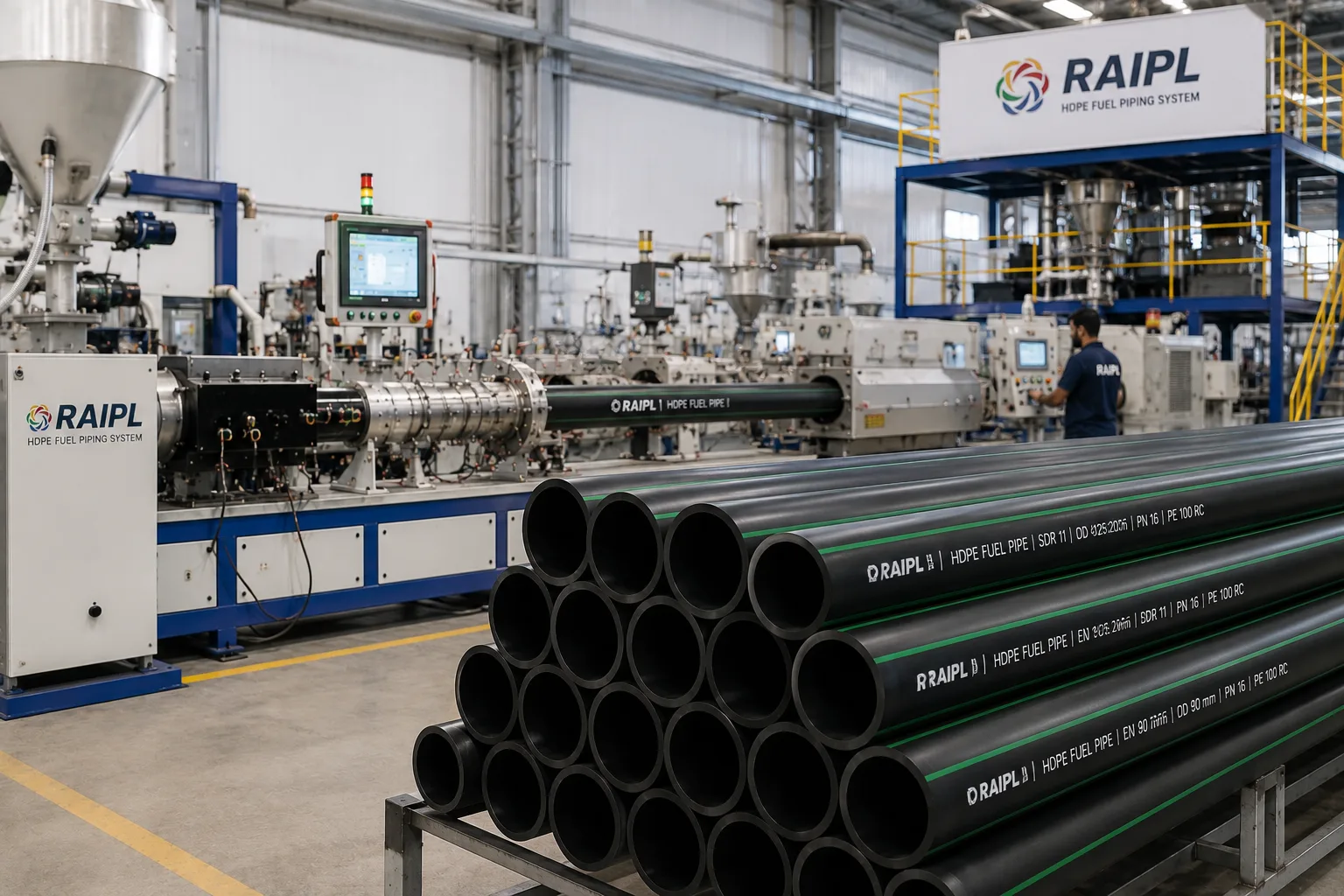
Why India Needs Domestic Fuel Piping Technology
India has built manufacturing capability across industries ranging from automobiles and engineering equipment to electronics, chemicals and infrastructure.
Petroleum retail infrastructure presents another opportunity.
Every petrol pump depends on a network of specialized equipment:
- Underground storage systems
- Fuel piping
- Fittings
- Dispensers
- Safety equipment
- Electrical systems
- Monitoring equipment
- Forecourt infrastructure
Some of the technologies used in this ecosystem have historically depended significantly on international manufacturers.
Specialized underground fuel piping is one such area where developing domestic manufacturing capability can strengthen India’s petroleum infrastructure ecosystem.
The objective is not simply:
“Replace an imported pipe with an Indian pipe.”
The bigger objective is:
Develop the technology, manufacturing knowledge, quality systems and supporting ecosystem within India.
What Does Localization Really Mean?
Localization is sometimes misunderstood as taking an existing product and manufacturing a cheaper version locally.
For specialized infrastructure, that is not enough.
True localization means developing capability across the complete product lifecycle.
This can include:
Material Knowledge → Manufacturing Technology → Process Control → Testing → Certification → Fittings → Installation → Technical Support
When these capabilities exist domestically, India is not simply producing a product.
It is building a technology ecosystem.
Why Specialized Fuel Pipe Is Different From Ordinary HDPE Pipe
India already has significant HDPE pipe manufacturing capability.
But an ordinary HDPE water or gas pipe should not automatically be treated as an underground petroleum fuel pipe.
Specialized fuel piping can require consideration of:
- Petroleum fuel compatibility
- Hydrocarbon permeation
- Multilayer construction
- Barrier materials
- Bonding technology
- Compatible fittings
- Jointing procedures
- Application-specific testing
- Relevant standards
Developing fuel piping domestically therefore requires specialized engineering beyond conventional pipe extrusion.
Multilayer Manufacturing Builds New Capability
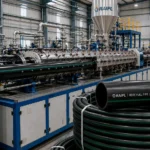
A specialized multilayer HDPE fuel pipe can combine different polymers in one engineered wall structure.
A simplified construction can be represented as:
HDPE → Tie Layer → EVOH Barrier → Tie Layer → HDPE
Each material has a different role.
HDPE
Provides important structural and mechanical characteristics.
Tie Layers
Help create adhesion between different polymers.
EVOH
Provides a specialized barrier function and additional resistance against hydrocarbon permeation.
Producing this type of pipe requires controlled multilayer extrusion capability.
Developing that capability within India creates technical knowledge that can support future advanced polymer products as well.
Why Import Dependency Matters
Imported products can provide valuable technology and have played an important role in developing infrastructure markets.
The issue is not that an imported product is automatically inferior.
The issue is dependency.
When a critical infrastructure category depends heavily on overseas supply, projects can become more exposed to:
- International shipping schedules
- Longer replenishment cycles
- Foreign supply-chain disruptions
- Import procedures
- Currency fluctuations
- Availability of replacement components
- International technical-support timelines
Domestic manufacturing can help create another supply option closer to the end market.
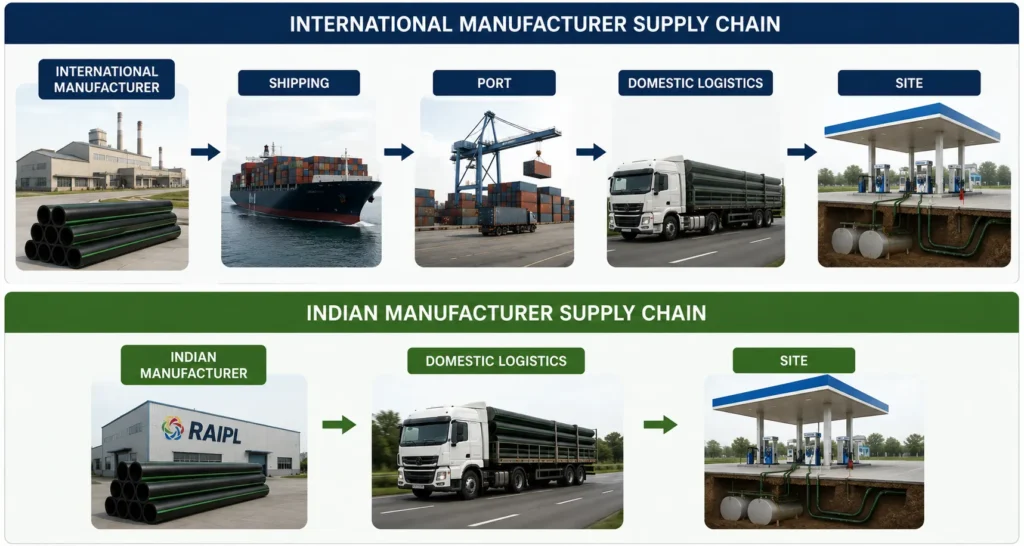
Local Manufacturing Can Shorten the Supply Chain
Consider two simplified supply chains.
Imported System
Overseas Factory → International Logistics → Port → Customs → Domestic Warehouse → Project Site
Domestic System
Indian Factory → Domestic Logistics → Project Site
Real supply chains can be more complex, but the principle is straightforward.
Manufacturing closer to the market can reduce some logistical dependencies.
This can become particularly valuable when a project urgently requires additional pipe or fittings.
Availability of Fittings Matters Too
Localizing only the straight pipe is not enough.
A complete fuel piping system can require:
- Couplers
- 45° elbows
- 90° elbows
- Tees
- Transition adaptors
- Flange components
- Other specialized connections
If the pipe is locally available but every important fitting remains difficult to source, the ecosystem is incomplete.
This is why domestic fuel-piping development should focus on the complete system.
Faster Technical Communication
Specialized piping projects can create technical questions during:
- Design
- Procurement
- Installation
- Jointing
- Testing
- Commissioning
Having the manufacturer and technical team within India can potentially make communication easier and faster.
Engineers can discuss:
- Pipe selection
- Fittings
- Installation procedure
- Site conditions
- Technical documentation
- Project requirements
in the same market and time zone.
Local manufacturing should therefore include local technical capability, not simply local production.
Site Support Becomes More Practical
A petroleum piping manufacturer should understand what happens after the product leaves the factory.
Installation teams may require guidance regarding:
- Pipe handling
- Scraping
- Electrofusion
- Alignment
- Cooling
- Trench routing
- Testing
- Documentation
A domestic technical team can potentially provide faster site support where required.
This helps connect manufacturing knowledge with field installation.
Local Manufacturing Can Support Better Feedback Loops
When manufacturing, engineering and customers are geographically closer, field feedback can reach the factory more quickly.
For example:
Site Feedback → Engineering Review → Manufacturing Improvement → Updated Guidance
This feedback loop can help manufacturers continuously improve products and processes.
For specialized infrastructure, this interaction between factory and field can be extremely valuable.
But “Made in India” Alone Is Not Enough
This is perhaps the most important point.
A product should never be selected for critical petroleum infrastructure only because it is manufactured in India.
Domestic manufacturing should not replace technical evaluation.
Buyers should still check:
- Intended application
- Applicable standard
- Certification
- Certification scope
- Fuel compatibility
- Technical test documentation
- Fittings
- Installation requirements
- Quality control
- Traceability
The goal should be:
Made in India + Technically Qualified
not
Made in India instead of Technical Qualification.
International Standards and Indian Manufacturing Should Work Together
India does not need to choose between domestic manufacturing and international technical standards.
The strongest approach combines both.
Indian Manufacturing
Recognized Technical Requirements
Independent Evaluation
Strong Quality Control
This allows domestic manufacturers to compete based on technical capability rather than nationality alone.
Why EN 14125 Matters
For thermoplastic and flexible metal pipework used in underground installations at petrol filling stations, EN 14125 is an important European standard.
Developing an Indian fuel piping system against internationally recognized requirements helps demonstrate that localization does not have to mean lowering the technical benchmark.
RAIPL’s multilayer HDPE fuel piping system has achieved EN 14125:2025 certification.
This forms an important part of the company’s approach to developing specialized petroleum piping technology in India.
The Role of Indian MSMEs in Specialized Manufacturing
India’s MSME manufacturing ecosystem has an important role to play in developing specialized infrastructure products.
MSMEs can often bring:
- Faster decision-making
- Specialized engineering focus
- Manufacturing flexibility
- Product-development speed
- Close customer interaction
- Local technical support
But entering technically demanding infrastructure sectors requires significant investment in:
- Machinery
- Tooling
- Raw materials
- Testing
- Certification
- Quality systems
- Skilled personnel
Supporting technically capable Indian manufacturers can therefore help build deeper domestic industrial capability.
From Manufacturing to an Ecosystem
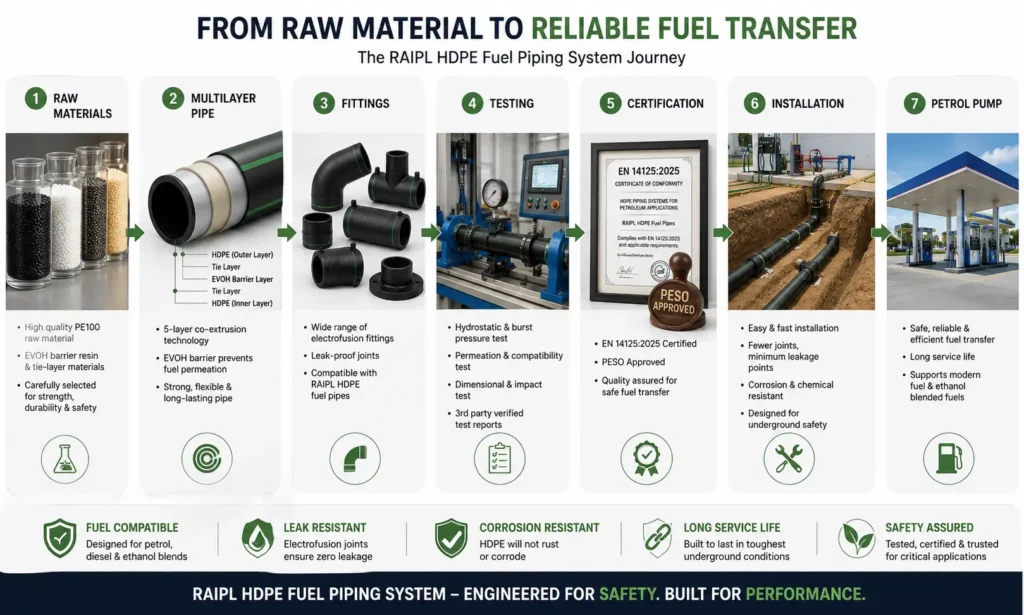
A successful Indian fuel-piping industry requires more than an extrusion machine.
The broader ecosystem can include:
Raw Materials
↓
Multilayer Manufacturing
↓
Fittings
↓
Testing
↓
Certification
↓
Installer Training
↓
Site Installation
↓
Commissioning
↓
Technical Support
When these capabilities exist together, India develops a sustainable petroleum piping ecosystem rather than simply one locally manufactured product.
Why Quality Control Becomes Critical
As local manufacturing grows, consistent quality becomes essential.
Fuel piping manufacturers need controlled processes for areas such as:
- Raw material identification
- Material handling
- Extrusion parameters
- Layer consistency
- Pipe dimensions
- Product marking
- Batch traceability
- Finished-product inspection
- Technical documentation
Made-in-India products should be able to demonstrate repeatability from one production batch to the next.
Traceability Builds Confidence
A locally manufactured product should be traceable.
The manufacturer should be able to connect the finished pipe with relevant production and quality information.
A good traceability chain can look like:
Raw Material → Production Batch → Pipe Marking → QC Record → Delivery → Project
This gives buyers greater visibility into the product they are installing underground.
Domestic Manufacturing Can Support Inventory Availability
Fuel piping projects do not always proceed exactly according to initial quantities.
A site may later require:
- Additional pipe
- Extra couplers
- Another elbow
- Replacement fitting
- Additional transition component
Having domestic manufacturing and inventory can potentially shorten replenishment times.
This can help projects avoid unnecessary delays, provided the required products are available.
Local Manufacturing Creates Skilled Employment
Advanced manufacturing also creates technical jobs.
A specialized fuel piping ecosystem requires people working in:
- Polymer engineering
- Extrusion
- Production
- Quality control
- Testing
- Mechanical engineering
- Product development
- Installation training
- Technical sales
- Field support
Developing these capabilities contributes to India’s broader manufacturing knowledge base.
The Opportunity for Future Exports
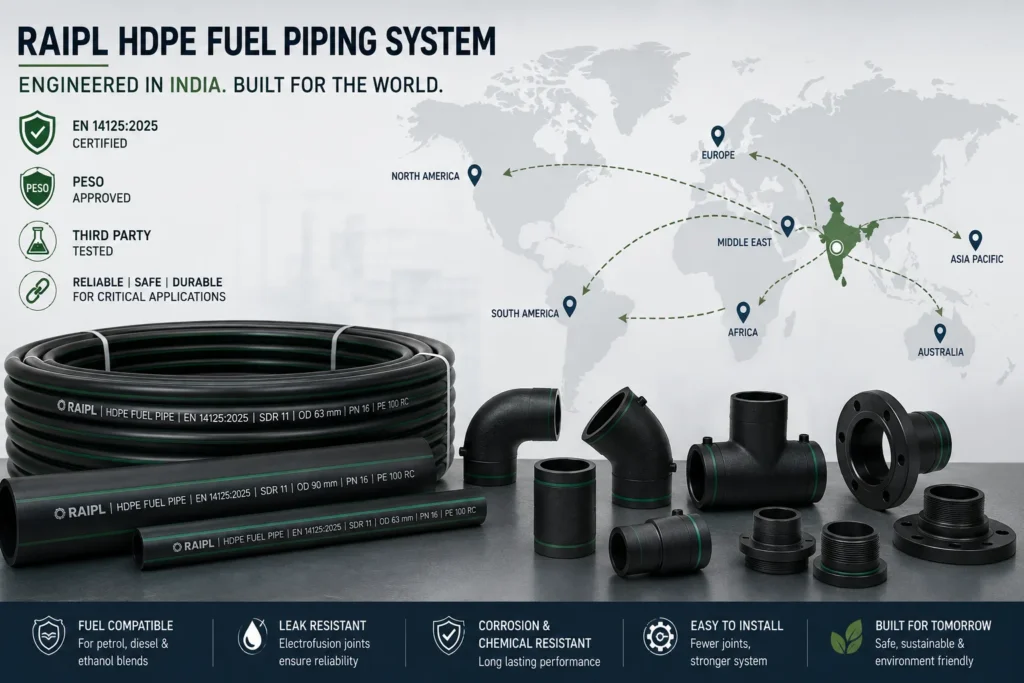
Localization should not end with the Indian market.
Once a domestic manufacturer develops:
- Reliable technology
- Consistent quality
- Internationally relevant certification
- Competitive manufacturing
- Strong technical documentation
the same capability can potentially support international opportunities, subject to the requirements of each target market.
The long-term goal should therefore move from:
Import Substitution
to
Indian Manufacturing
and eventually toward
Export Capability.
Building Confidence Takes Time
Specialized infrastructure products are not adopted simply because a factory begins production.
Customers, consultants and petroleum companies need confidence.
That confidence comes from:
- Technical documentation
- Independent evaluation
- Consistent product quality
- Successful installations
- Field performance
- Responsive technical support
Domestic manufacturers need to earn that confidence through engineering and performance.
RAIPL’s Journey Into Multilayer HDPE Fuel Piping
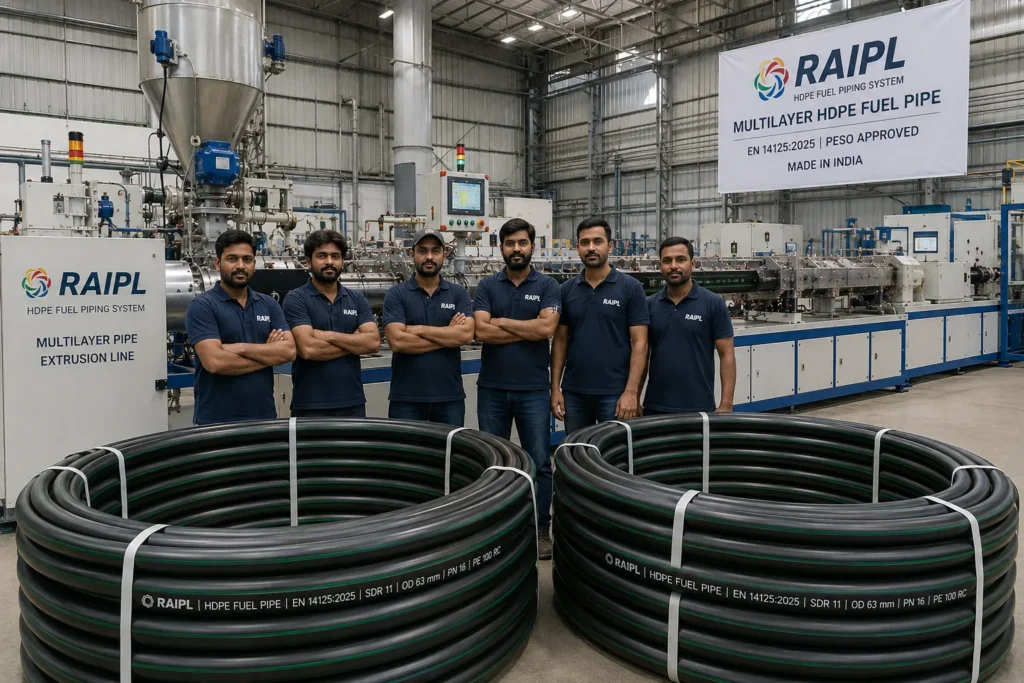
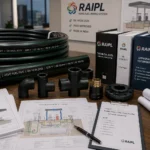
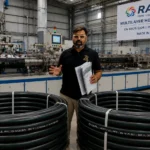
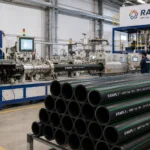
RAIPL (Rahul Arts India Pvt. Ltd.) is developing specialized multilayer HDPE fuel piping technology for underground petroleum infrastructure in India.
The RAIPL system combines:
- Multilayer HDPE fuel pipe
- Tie-layer technology
- EVOH barrier technology
- Compatible electrofusion fittings
- Transition components
- Technical documentation
- Quality control
- Installation guidance
The system has achieved EN 14125:2025 certification.
RAIPL’s objective is to build a complete Indian fuel-piping ecosystem capable of serving modern petroleum infrastructure.
More Than Import Substitution
The long-term opportunity is bigger than replacing imported metres of pipe.
India has the opportunity to develop capability in:
Design
Materials
Manufacturing
Testing
Certification
Installation
Technical Support
and eventually
Exports.
That is how a country moves from being primarily a consumer of specialized technology to becoming a producer of it.
Frequently Asked Questions
Why manufacture HDPE fuel pipe in India?
Domestic manufacturing can strengthen supply chains, develop local technical expertise, improve access to technical support and reduce dependence on overseas sourcing.
Is an Indian fuel pipe automatically better than an imported pipe?
No. Products should be evaluated on technical performance, applicable standards, certification, quality, compatibility and project requirements—not nationality alone.
Why is multilayer manufacturing important?
It allows different materials to perform different functions within the pipe, including structural, bonding and specialized barrier roles.
Why are fittings important for localization?
A complete underground fuel system requires more than straight pipe. Compatible couplers, elbows, tees and transition components are also needed.
Does Made in India replace international certification?
No. Domestic manufacturing and internationally recognized technical requirements should complement each other.
Can Indian fuel piping eventually be exported?
Potentially, yes, provided the product meets the technical, regulatory, certification and commercial requirements of the target market.
Made in India Should Mean Technology Made in India
True localization is not about changing the country written on a product label.
It is about building the capability behind the product.
Engineering in India.
Manufacturing in India.
Testing and quality control in India.
Technical support in India.
And ultimately:
Technology from India for the world.
That is the larger opportunity behind RAIPL’s development of a Made-in-India multilayer HDPE fuel piping system.